Solar generation
How solar panels work
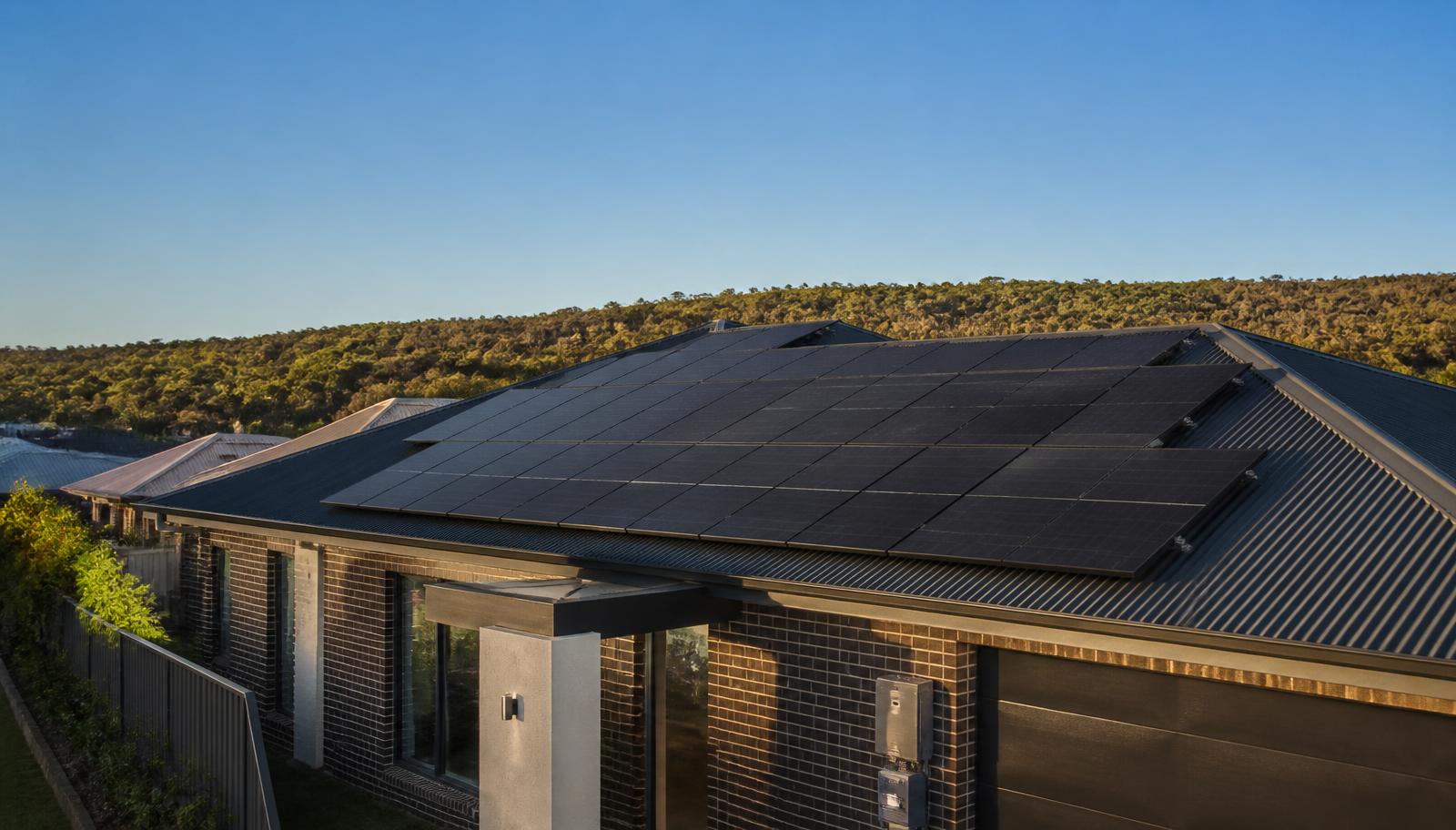
A solar panel is a sheet of silicon cells under tempered glass. When daylight hits a cell it knocks electrons loose and creates a direct current. That DC power runs down to an inverter, which converts it into the 230V alternating current your home already uses — so your appliances draw from the roof first and from the grid only when they need to.
- Panel efficiency
- 21 – 23%
- Inverter efficiency
- 97 – 99%
- Product warranty
- 15 – 25 yrs
- Performance warranty
- 25 – 30 yrs
- 1
Daylight hits the cells
Modern N-type and TOPCon cells generate even on overcast days and early mornings, not just in direct summer sun.
- 2
The inverter converts it
A string or hybrid inverter turns DC into usable AC, tracks the best operating point of each string and reports live production to your phone.
- 3
Your loads use it first
Everything running at that moment — aircon, hot water, pool pump, EV charger — is powered by the roof before any grid power is bought.
- 4
The surplus is stored or exported
Whatever is left over charges a battery if you have one, or is exported to the grid for a feed-in credit.
Built to last
Quality tier-1 panels are built to last 30+ years. They degrade slowly — typically under 0.4% a year — so a good panel is still producing around 88–90% of its original output well past 30 years of Australian weather.